

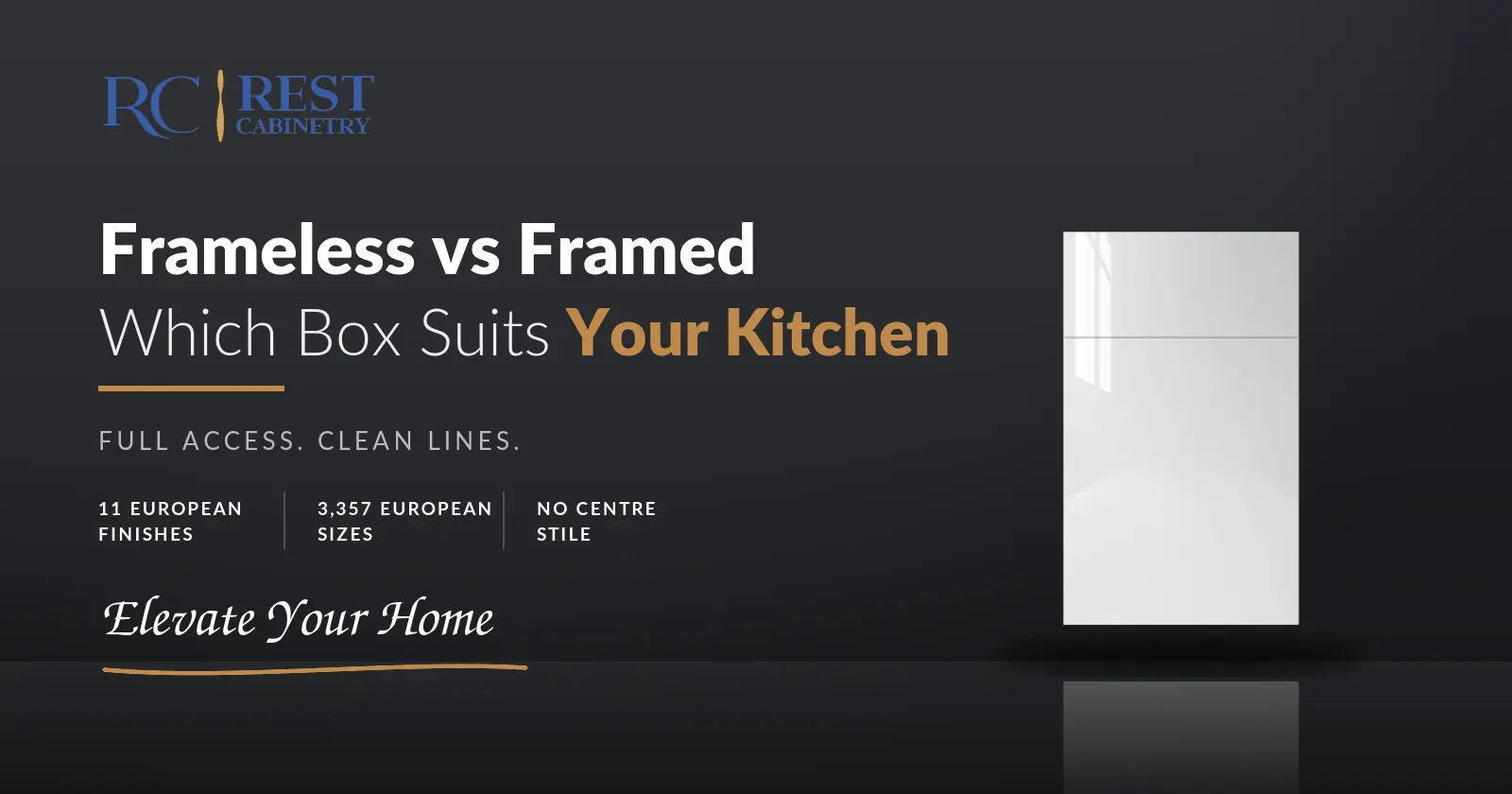
Almost every cabinet sold in America is one of two things, and the difference between them is a strip of hardwood about an inch and a half wide. Whether that strip is there changes how much you can fit through the opening, how the doors hang, how the kitchen looks from across the room, and how much a slightly crooked wall matters. It is worth ten minutes.
A framed cabinet has a flat hardwood frame fixed to the front edge of the box, like a picture frame around the opening. Doors hang off it. It is the American standard, and it is what nearly all of our collections are built as.
A frameless cabinet has no such frame. The doors mount straight onto the sides of the box, which is thicker to take them. The style came out of post-war Europe, which is why the trade still calls it European construction, and why our European line is where you find it here.
A third word gets muddled into this constantly, so it is worth separating now. Inset is not a third kind of box. It is a framed cabinet whose door is set flush into the opening instead of lying over the frame, which means the question below — framed or frameless — comes first, and inset is a choice you make afterwards, on top of framed.
Three jobs, and they explain why it survived. It stiffens the box, so a framed cabinet arrives square and stays square. It gives the door something forgiving to sit against, so small misalignments disappear. And where two cabinets meet, the frames butt together and give the installer a straight, solid edge to pull tight to a wall that may be anything but straight.
That last one matters more than it sounds in the older housing stock around Norcross and Duluth, where a wall out of true is closer to the rule than the exception.
Space, mostly, and it is measurable. The frame occupies the front of the opening, so removing it hands that width back. On a 30-inch cabinet a frameless box gives you a noticeably wider opening than a framed one, which is the difference between a stack of plates fitting and not fitting.
You also gain a look. With no frame, the doors sit close together across the whole run and the kitchen reads as a continuous surface rather than a row of separate boxes. On a large flat plane like a bank of tall units, that is a very different room.
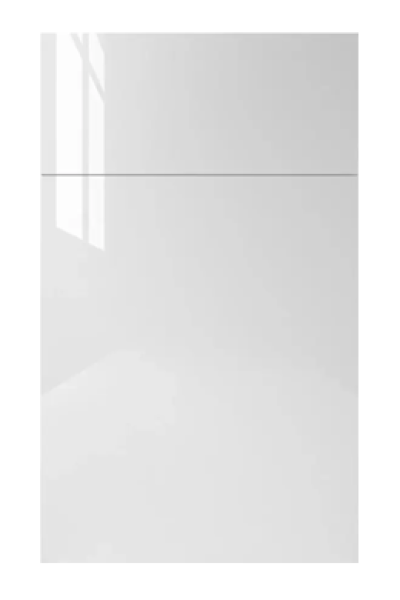
Eleven finishes and 3,684 cabinet sizes sit in the frameless line. The Valencia group is the broadest — Valencia White, Valencia Gray, Valencia Misty Gray, Valencia Cashmere Cream, Valencia Chateau Brown and Valencia Rose Teak — each carrying 463 sizes or more, among the deepest ranges of any finish we hold.
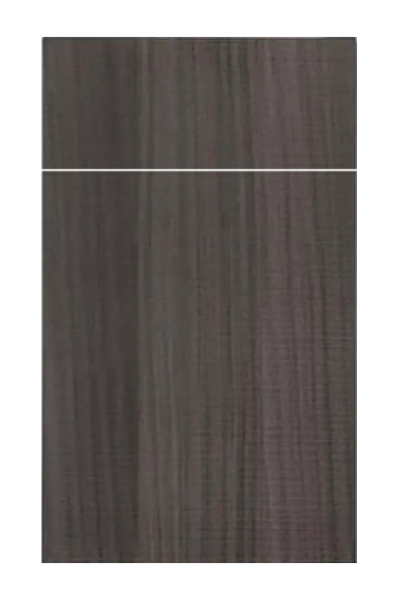
Alongside them sit the flat matt fronts: Matte White, Matte Gray, Matte Blue and Matte Charcoal Black, with Walnut covering the wood option. These are the handleless-looking fronts people are usually pointing at when they say modern.
The frame does not only sit at the front; it narrows everything behind it. A drawer box in a framed cabinet has to clear the frame on both sides, so it is built narrower than the box it lives in. Take the frame away and the drawer can run almost the full internal width, which on a bank of pan drawers is the difference between stacking two rows of plates and stacking three.
The same applies to a rollout shelf and to anything you slide in and out rather than reach over. It is why frameless is so often chosen for the working wall of a kitchen even when the rest of the room is framed.
A frameless hinge screws to the inside face of the cabinet side and adjusts in three directions with a screwdriver. That adjustability is the reason a frameless kitchen can be brought into perfect alignment after installation, and the reason it needs to be: nothing about the box forces the doors straight, so the setting-out is done at the hinge.
Framed hinges have less adjustment because they need less. The frame has already done most of the work. Neither approach is better; they simply move the precision to a different point in the job.
If the kitchen is in a house built before about 1990 and the walls have never been touched, framed is the lower-risk choice, and it is why most of what we hold is framed. The frame absorbs the room’s imperfections. A traditional door such as Oxford White or a flat panel such as Shaker Origami White will fit a room like that with less fuss.
If the kitchen is new construction, a renovation where the walls are coming back to plumb anyway, or an open plan where the cabinetry is meant to look like joinery rather than furniture, frameless repays the extra care.
In one continuous run, no — the front planes will not agree and the gap pattern between doors gives it away immediately. Across a room, yes, and it is done deliberately more often than people realise: a framed perimeter with a frameless island, or frameless tall units against a framed working wall.
The rule that keeps it looking intentional is to change construction only where something else changes too: a different colour, a different level, a physical break in the run. Change it in the middle of a straight wall and it reads as a mistake.
Framed and frameless boxes sit on adjacent racks in Norcross, and putting a hand into each opening settles the question faster than any specification sheet. The full range is in the cabinet catalogue.
Every collection below is stocked at our Norcross, GA warehouse for pickup or delivery across metro Atlanta.
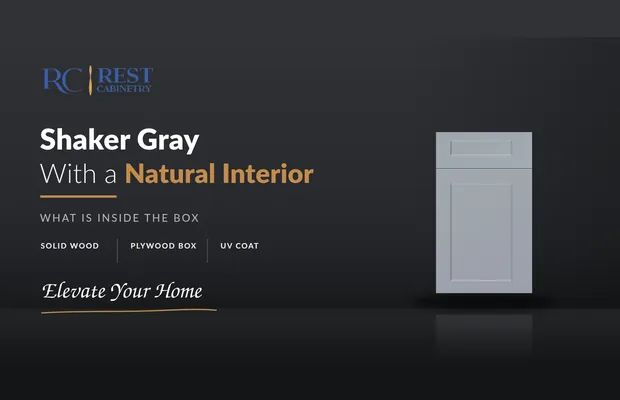
The gray is on the outside. Open a door and the box is natural wood veneer...
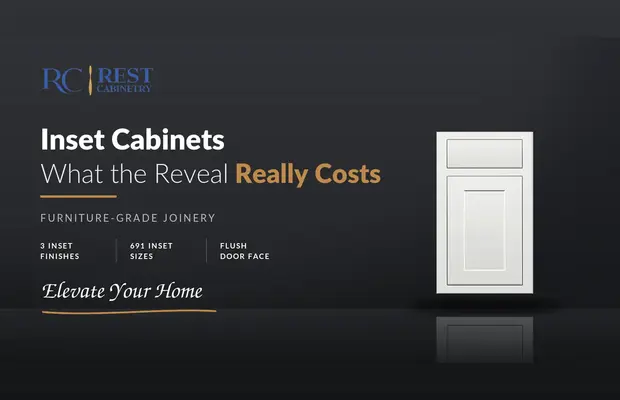
The flush door is the most expensive quarter-inch in cabinetry. Here is exactly what you buy...
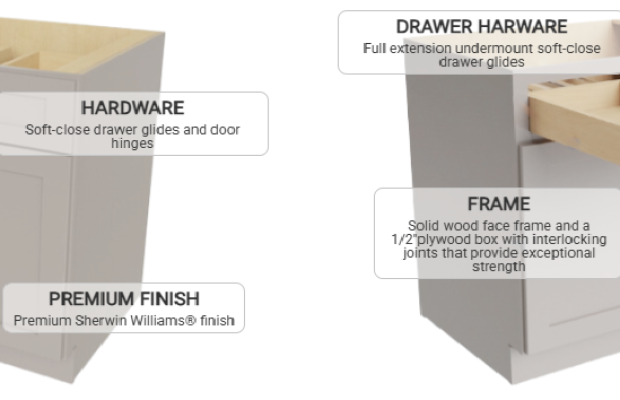
Two cabinets can look identical in a showroom and be built completely differently. The differences are...
Log in to see prices and place orders
Don't have an account? Register

