

Two cabinets can look identical with the doors shut and be built completely differently behind them. The differences are not hidden — they are written on the spec sheet, in numbers most buyers skip. Here is what each one is telling you.
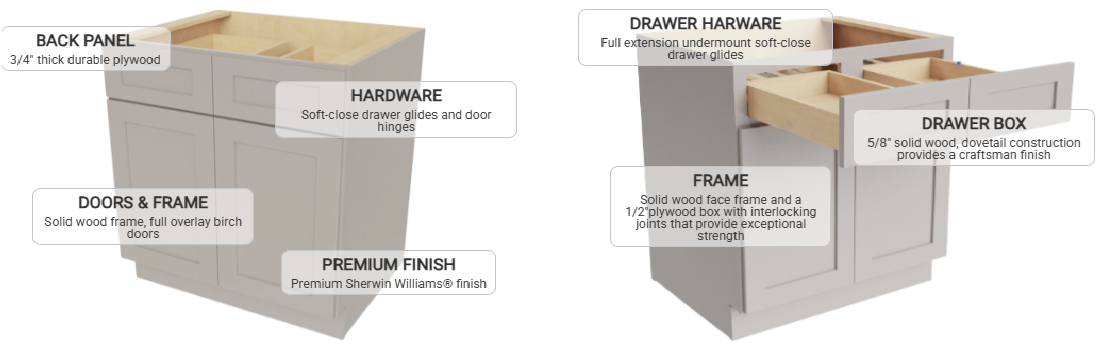
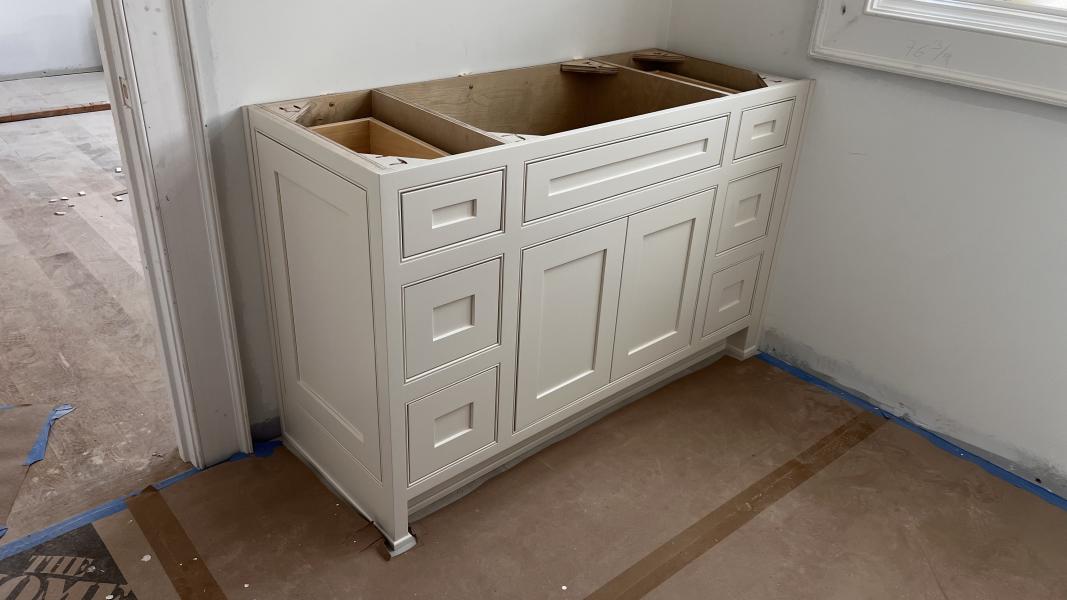
Our cabinet boxes are half-inch plywood with interlocking joints and a solid wood face frame. Two things are doing work in that sentence. Plywood is cross-laminated, so it holds a screw and it does not swell the way a pressed-sawdust panel does when a sink leaks. And interlocking joints mean the panels are cut to hold each other mechanically rather than relying on staples through the joint, which is what fails first under the weight of a stone countertop.
That specification is the same across every line we stock — the 22 finishes in the Shaker collection, the raised center panels and mitered frames of the Classic collection, and the rest. The door changes; the box does not.
The back is three-quarter-inch plywood. This is the part cheap cabinets economize on hardest, sometimes down to a thin sheet stapled into a rabbet. The back is what carries a wall cabinet: the screws that hold the unit to the studs go through it. A thin back is why a loaded wall cabinet can pull away from a wall years later.
Drawer boxes are five-eighths-inch solid wood, dovetailed, on full extension undermount soft-close glides. Dovetail joints interlock, so the box cannot be pulled apart along its length — which is exactly the force a drawer full of pans applies every time it opens. Full extension means the back of the drawer clears the cabinet, so you can reach what is at the back. Undermount means the glides sit beneath the box rather than at its sides, which is both why the drawer is wider inside and why you cannot see the hardware.
Every product page states it plainly rather than leaving you to ask — Shaker Ash Grey lists solid wood faces and dovetailed drawers on the page itself, and so does every other finish in the range.
Doors are full overlay birch on a solid wood frame, with soft-close hinges, finished in Sherwin Williams paint. Full overlay means the door covers the frame, leaving a narrow even gap between doors rather than a wide one — it is the difference between a kitchen that reads as a continuous run and one that reads as a row of separate boxes.
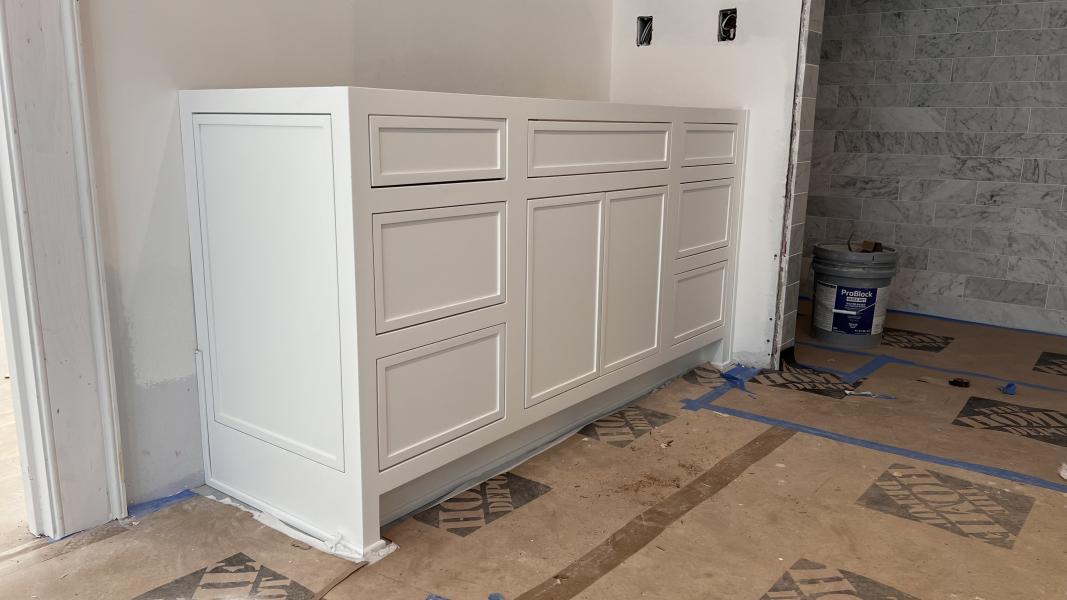
Which door you end up with is the one decision here that is purely yours, and the collections are organised by exactly that. Slim is a full-overlay door with no frame showing; European runs handleless, with the pull cut into the door; Escada puts a sculpted center panel where Shaker leaves a flat one; Inset sets the door inside the frame rather than over it; and Oxford carries a long angled inside bevel. All nine are on the collections page.
None of it depends on the cabinet arriving assembled. A ready-to-assemble cabinet is the same panels, the same joints, the same drawer boxes and the same hardware, packed flat and put together on site. What flat packing changes is the freight, not the specification. You can read more about that on our cabinet store page, and the delivery and pickup terms set out what actually arrives and when.
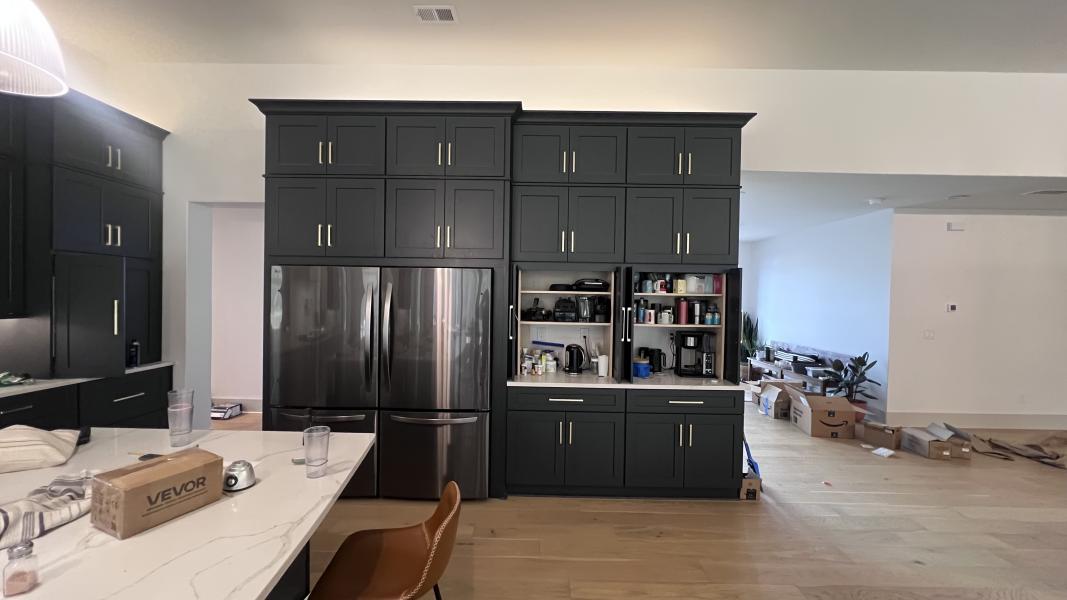
Overlay describes how much of the frame the door covers. On a partial overlay cabinet the door sits inside a wide border of exposed frame, and every door is an island. On full overlay the doors nearly touch, and the frame reads as a thin shadow line rather than a grid. It is the single clearest visual difference between a builder-grade kitchen and one that looks designed, and it costs nothing extra to specify — it is simply how the cabinet is made.
It also means the hinges have to be adjustable in three directions, because a run of doors with narrow gaps shows any misalignment immediately. That adjustment is a fitting job, not a manufacturing one, and it is worth spending twenty minutes on at the end.
It is rarely the door. The door is what sells the cabinet, so it usually looks reasonable. The savings are taken in the places nobody opens in a showroom: a thinner back, a box made of pressed board rather than plywood, a drawer stapled together instead of dovetailed, side-mounted glides that waste an inch of width and stop three inches short of the front, and a finish that is a printed film rather than paint. Every one of those is invisible at the point of sale and obvious four years later.
Ours is a strict no-particleboard policy across every line, and every collection is engineered to take granite and quartz. Cabinets, hinges and drawer glides carry a 12-month limited warranty. If you want to see the construction rather than read about it, the installation gallery is 61 photographs from jobs in progress, and everything above is held at our Norcross warehouse — the Haven, Valencia and Shaker lines included.
Every collection below is stocked at our Norcross, GA warehouse for pickup or delivery across metro Atlanta.

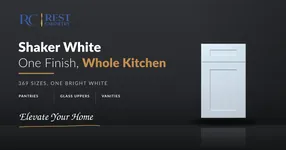
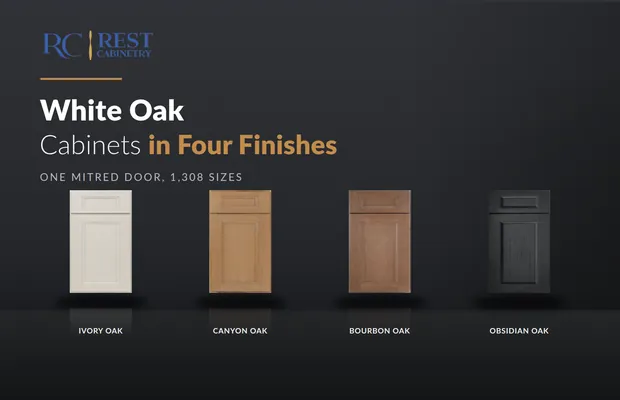
Four finishes on one white oak door: a painted ivory, two stains and a black. What...
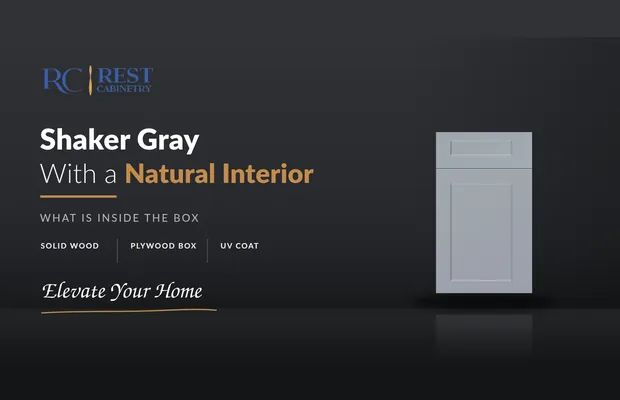
The gray is on the outside. Open a door and the box is natural wood veneer...
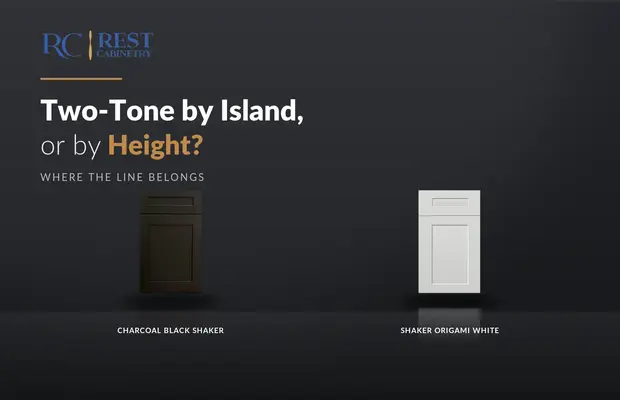
There are only two honest places to put the line. Everything else is a colour change...
Log in to see prices and place orders
Don't have an account? Register

