

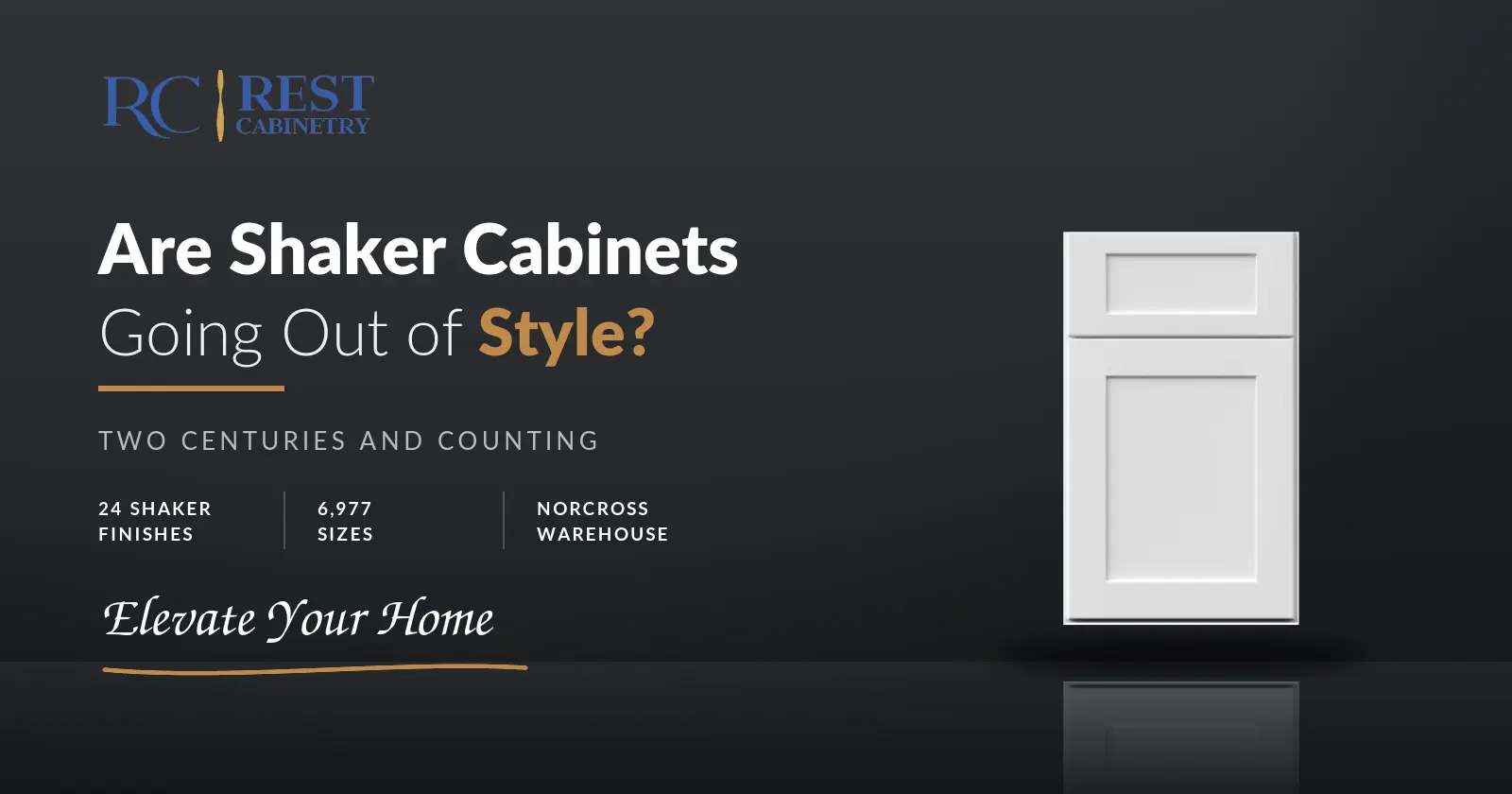
This gets asked more than almost anything else, usually by somebody about to spend real money and worried about spending it on the wrong decade. It deserves a straight answer rather than a reassuring one.
No. Shaker is not going out of style, because it is a proportion rather than a fashion. What changes every few years is the finish it is painted in and the hardware bolted to it, and both of those are replaceable without touching the cabinets.
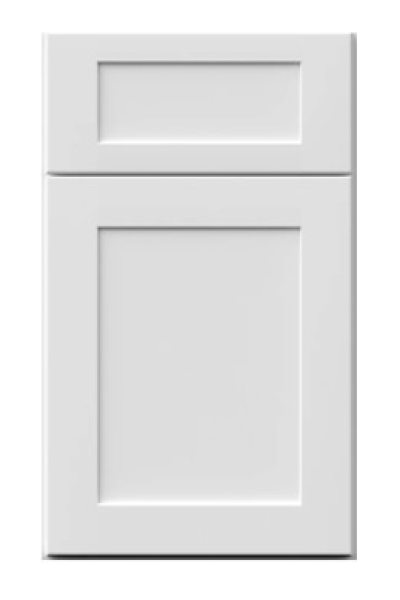
A trend is a decision somebody made that a lot of people copied. A proportion is a relationship between dimensions that keeps looking right regardless of what anybody decided. The flat recessed panel is the second kind: four members of even width around a rectangle, with no ornament that ties it to a moment.
That is why the style survived from the eighteen-hundreds to now through Victorian excess, mid-century modernism, and the country-kitchen decade, none of which had anything in common except that Shaker doors kept being made throughout.
Three things, in order. The colour, which belongs unmistakably to a period. The hardware, which belongs to a shorter one. And the countertop, which is the most expensive of the three to change and the one people notice least.
None of those is the door. A Shaker kitchen from 2008 in cherry stain with rope moulding looks dated; the same door in a current white with plain pulls does not. The cabinet did not change.
Three things worth knowing if you are ordering this year. Narrower frame members: the same Shaker idea with slimmer rails, which is what the Slim line is. Warmer and greener paints instead of cool greys, which is why Shaker Ivy and the sages are moving. And wood coming back on islands under painted perimeters.
All three are finish decisions. None of them requires a different door.
Shaker with applied ornament. A flat panel with rope moulding, corbels, or a heavily glazed and distressed finish is not really Shaker any more — it is a Shaker door being used as a base for decoration, and decoration is exactly the thing that carries a date stamp.
If you want the style to hold, keep the door plain and put the personality into the colour, which you can repaint, and the hardware, which you can unscrew.
Shaker is the deepest collection we hold, at 24 finishes and 6,977 individual cabinet sizes, and it is deepest because it is what people keep asking for. Within it the movement is toward the softer whites such as Shaker Origami White, the warm greys like Shaker Dove, and colour on islands rather than everywhere.
Most people asking this are really asking whether a buyer in eight years will discount the house for it. On a plain Shaker door in a neutral paint, no. It is the most widely recognised cabinet front in the country and it reads as normal rather than as a choice, which is exactly what you want a buyer to feel.
If resale is genuinely the driver, the finish matters far more than the door — choosing between the whites is where that decision actually sits.
Almost everyone who asks this has seen the same thing: a room in a magazine with no visible cabinet fronts at all, or a designer saying the flat panel has had its day. Both are real, and both describe a small, expensive corner of the market rather than the kitchens being fitted around them.
It is worth separating what is fashionable from what is common. Handleless slab fronts are fashionable. Shaker is common. A kitchen built on what is common ages into the background; a kitchen built on what is fashionable ages into a date. Neither is a mistake, but they are different bets and they should be made deliberately rather than by accident.
If Shaker were going to be displaced, the replacement would already be visible in what people order, and there are two candidates. The first is the narrow-rail version of the same idea — Slim White and Slim Silver Gray are the same flat panel with thinner frame members, which reads more contemporary without abandoning the proportion.
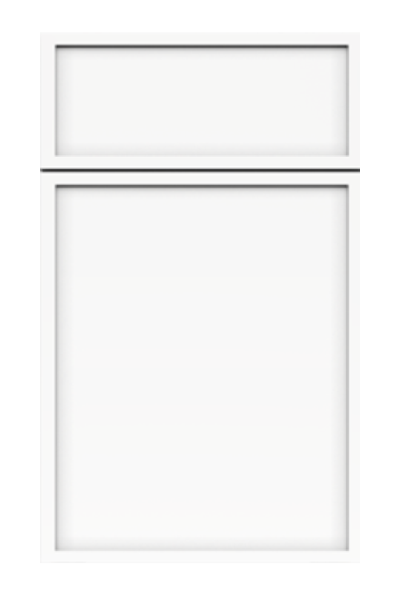
The second is the frameless slab, with no frame or panel at all: Valencia White and Matte Charcoal Black. That is a genuinely different door rather than a variation, and it belongs in a genuinely different room.
Neither is replacing Shaker. Both are taking a share of the kitchens that want to look newer, which is a different thing from a style dying. A style dies when it stops being made; these two are competing for attention while the flat panel goes on outselling both of them by a wide margin, year after year, in every part of the country.
Keep the door plain. Choose a finish you can live with rather than one you have just discovered. Buy hardware you could change in an afternoon. And keep the layout on the standard grid so a cabinet can be swapped later without rebuilding a wall — that is covered in the standard size grid.
The Shaker range is at the Norcross warehouse, and the whole catalogue sits in shop cabinets.
Every collection below is stocked at our Norcross, GA warehouse for pickup or delivery across metro Atlanta.

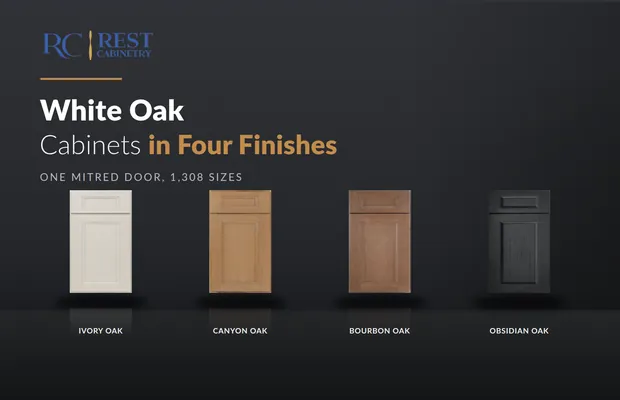
Four finishes on one white oak door: a painted ivory, two stains and a black. What...
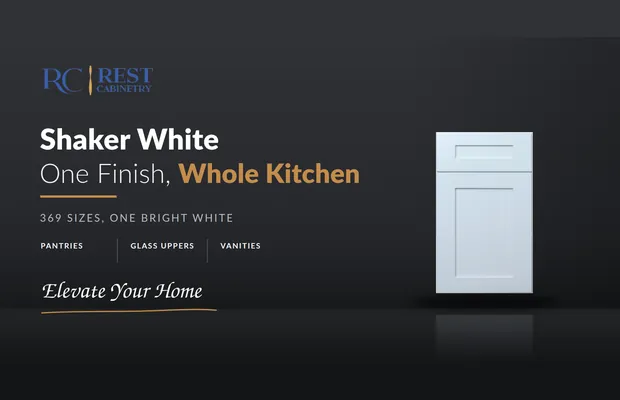
Shaker White carries 369 sizes, the most of any Shaker finish we hold. That range is...
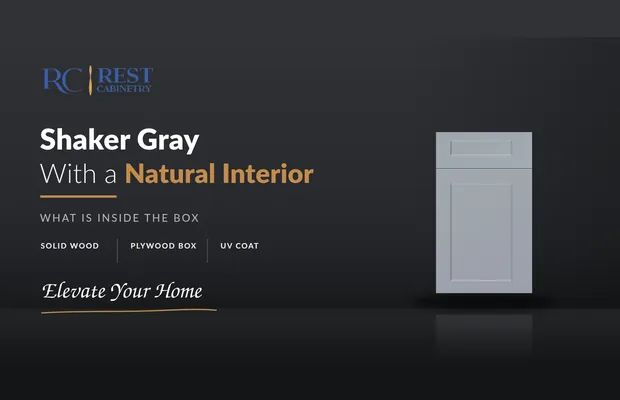
The gray is on the outside. Open a door and the box is natural wood veneer...
Log in to see prices and place orders
Don't have an account? Register

