

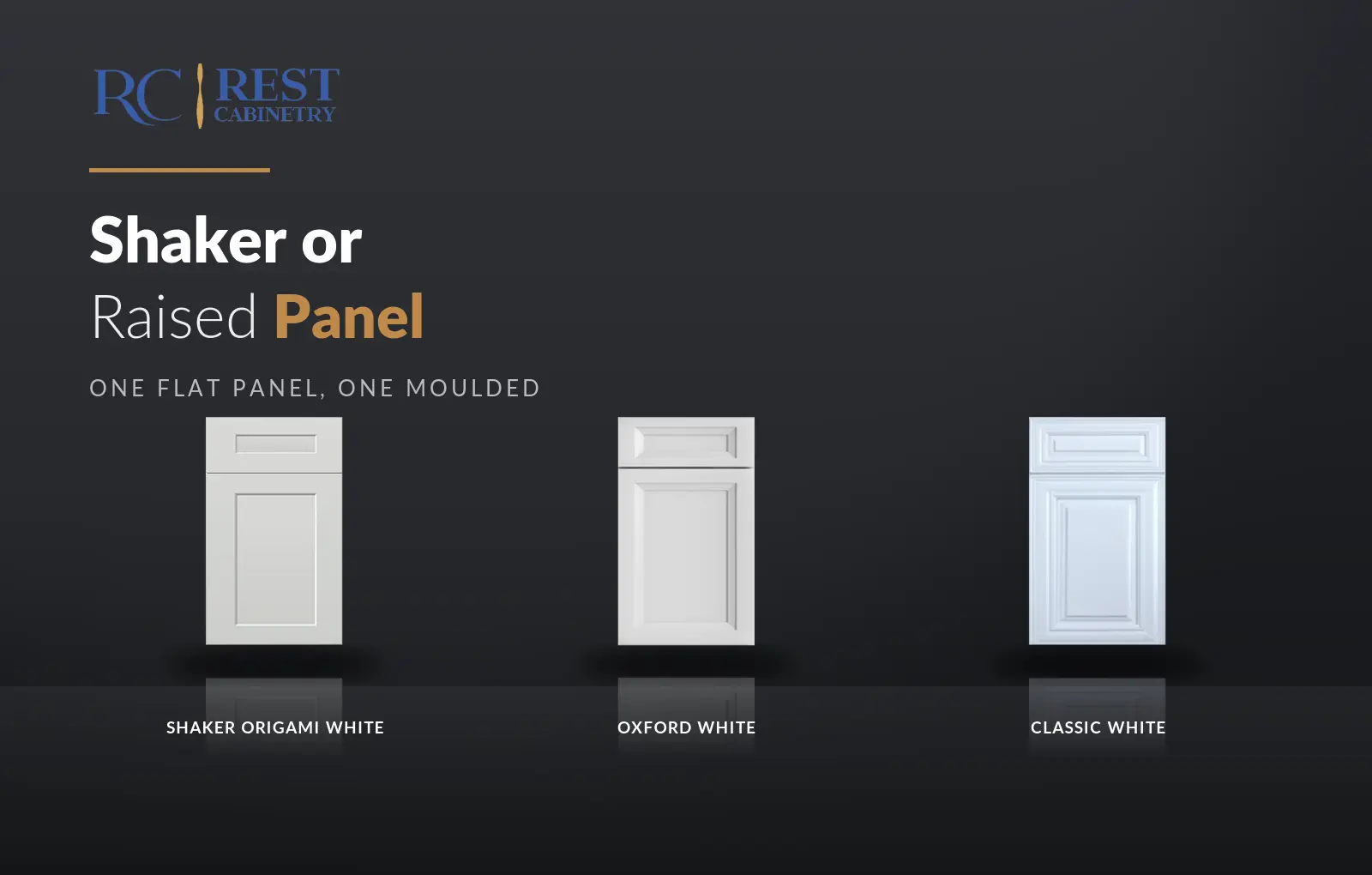
These are the two door styles most kitchens are actually chosen between, and the marketing around both is nearly useless. Here is the short answer, then the reasoning.
Choose Shaker if the room is modern, mixed-width, or you want it to age slowly. Choose a raised panel if the house has traditional trim the kitchen has to sit beside. Everything else — cost, durability, finish choice — is broadly the same between them, because both are built the same way behind the front.
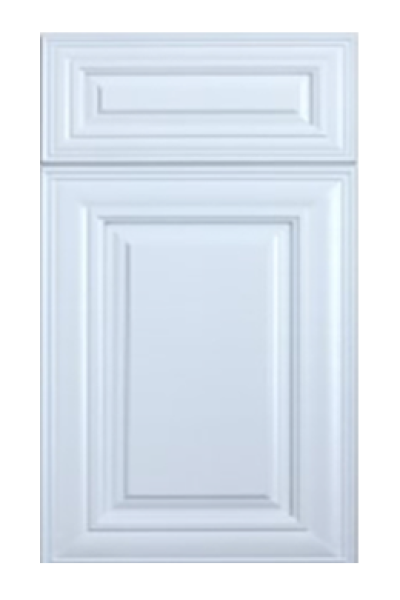
A Shaker door is five pieces: four frame members around a flat panel that sits recessed behind them. A raised panel door is also five pieces, but the centre panel is machined so it rises toward the middle, and the inner edge of the frame carries a moulded profile rather than a square shoulder.
That is the whole difference. Everything people believe follows from it — that one is modern and one is traditional, that one is easier to clean, that one dates faster — is a consequence of those two machining decisions.
A flat rectangle looks correct at any size. Stretch it to 36 inches or squeeze it to 9 and the proportions do not change, because there is nothing in the panel to distort.
A raised panel has a centre with a shape in it, and that shape has a natural size. On a narrow door the moulding eats most of the face and the panel almost disappears; on a very wide one the panel reads as a large flat field with a frill round the edge. In a kitchen where every cabinet is 30 or 36 inches this never shows. In a run of mixed widths — which is most real rooms — it does.
This is the practical reason we hold 21 finishes and 6,463 sizes in Shaker against 11 finishes in Classic: the flat panel is what people building an awkward wall keep coming back to.
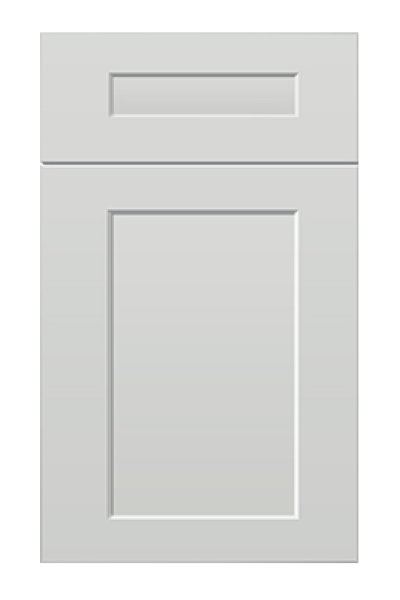
The claim that Shaker is easier to clean is half true. A Shaker door has one square ledge along the bottom rail where the panel meets the frame, and that ledge collects dust and cooking film. A raised panel has more total profile but it is curved, so a cloth follows it instead of stopping at a corner.
In practice both need wiping and neither is difficult. If cleaning is genuinely the deciding factor, the door to look at is a frameless slab with no profile at all — that is the European line.
Raised panel is more strongly associated with a period, and that period is roughly 1990 to 2010 in American kitchens. That association is why it reads as dated to some people and as warm and familiar to others, and neither reaction is wrong.
Shaker carries less of that baggage because it has been made continuously since the nineteenth century and never belonged to one decade. It is the safer choice if the kitchen has to look current in fifteen years, and the duller choice if you want the room to have an opinion.
The most useful test has nothing to do with taste. Stand in the doorway of the kitchen and look at the trim around the door you are standing in. If it is square-edged and plain, Shaker will agree with it. If it carries a moulded profile, a raised panel or a moulded five-piece door such as Oxford White will agree with it instead.
A kitchen that argues with the trim of the room it opens onto looks wrong in a way most people cannot name. Matching that one detail solves more than any amount of colour matching.
The box, the drawer construction, the glides and the hinges do not change with the door style. Two cabinets in the same collection with different fronts are the same cabinet. If you are comparing quality between suppliers, the front is the last thing to look at — what is inside the cabinet box is where the difference lives.
Finish choice is broadly equal too. Shaker Origami White and Classic White are both painted whites; the door shape is what you are choosing between, not the paint.
Here is the arithmetic nobody does until the plan is drawn. A run of 134 inches breaks into cabinets on a three-inch grid with something left over, and that leftover lands in a filler or in a narrower cabinet than the ones beside it.
With a flat panel the narrow cabinet simply looks narrow. With a raised panel it looks wrong, because the moulding does not shrink with the door and the panel inside it gets squeezed to a slot. That is the real reason mixed-width kitchens gravitate to Shaker — not fashion, geometry. Compare Shaker White with Princeton Off-white at 12 inches and it is immediately visible.
Both are stocked deeply enough that the layout is not the constraint: Shaker Antique White carries 314 sizes and Casselberry Antique White 197.
Take one of each to the doorway of your own kitchen and hold them against the architrave. Thirty seconds of that answers it better than a week of photographs, because a photograph cannot show you the trim you already own.
Both door styles sit on the same racks in Norcross. If the layout is not settled, the standard size grid comes before the door, and the full range is in the cabinet catalogue.
Every collection below is stocked at our Norcross, GA warehouse for pickup or delivery across metro Atlanta.

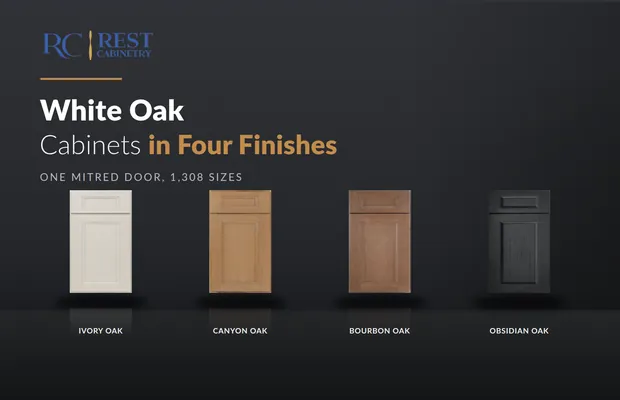
Four finishes on one white oak door: a painted ivory, two stains and a black. What...
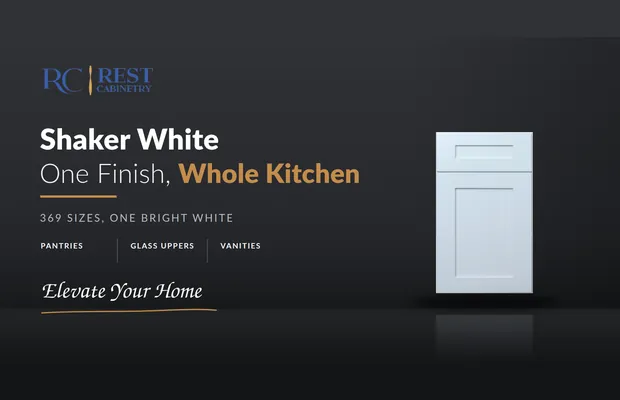
Shaker White carries 369 sizes, the most of any Shaker finish we hold. That range is...
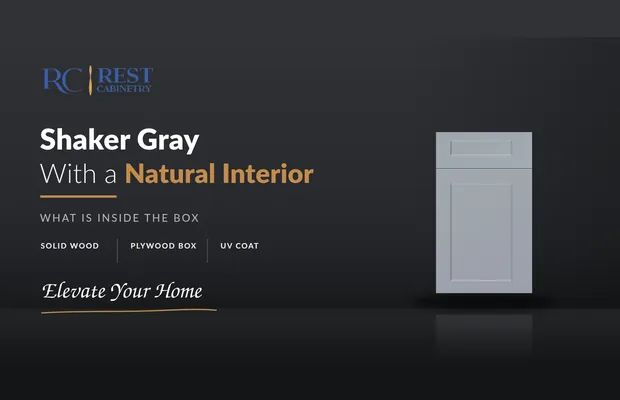
The gray is on the outside. Open a door and the box is natural wood veneer...
Log in to see prices and place orders
Don't have an account? Register

