


RTA stands for ready-to-assemble, and it describes how a cabinet travels rather than how it is made. That distinction gets lost constantly, so it is worth being blunt about: a flat-packed cabinet and a pre-built one can come off the same line, from the same materials, with the same hardware. What changes is the box it ships in.
A carton containing the sides, the back, the bottom, the face frame, the door or doors, any drawer boxes, and a bag of hardware. The parts are already cut, drilled and finished; nothing is sawn or painted on site. Assembly is a matter of bringing pre-machined parts together in the right order.
A pre-assembled cabinet arrives as a finished box that you lift into place. Same parts, joined at the factory instead of in your kitchen.
Air. A built cabinet is mostly empty space, and freight is charged on the space as much as the weight. Flat-packed, the same kitchen occupies a fraction of the volume, which is why the shipping cost on an RTA order is so much lower and why a warehouse can hold far more of the range at once.
That second point is the one that matters to a buyer. Holding 20,889 individual cabinet sizes across nine collections is only possible because most of them are not sitting on a rack as assembled boxes. Depth of stock is a direct consequence of flat-packing.
It does not change the material of the box, the joinery, the drawer construction, the glides or the hinges. Those are decided by the specification, not the packing method, and they are what actually determine how long a kitchen lasts. If you want to compare two cabinets honestly, compare those, not the carton — what is inside a kitchen cabinet box is the list to work through.
It also does not change the finish. Shaker Origami White is the same paint whether the box travels flat or built, and the same holds across the Shaker, Classic, Oxford and European lines.
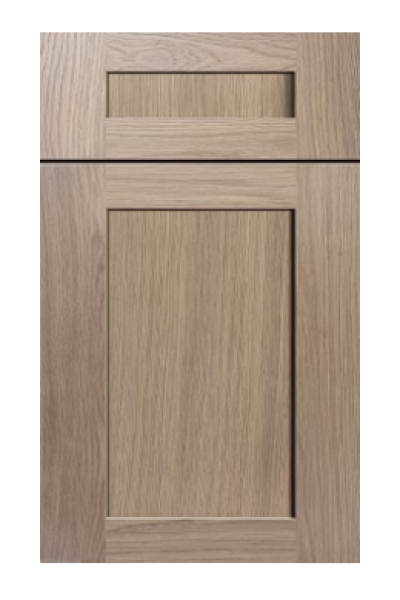
The parts are pre-drilled, so the work is alignment rather than fabrication: bring the sides to the bottom, square the box, fix the back, hang the door, adjust the hinge. The two things that decide whether it goes well are checking the box is square before the back goes on, and not overdriving a fixing into a pre-drilled hole.
Most people who are comfortable with a drill and a square manage it. Most people who are not should price a fitter into the job, and should do that at quote stage rather than after the pallet arrives.
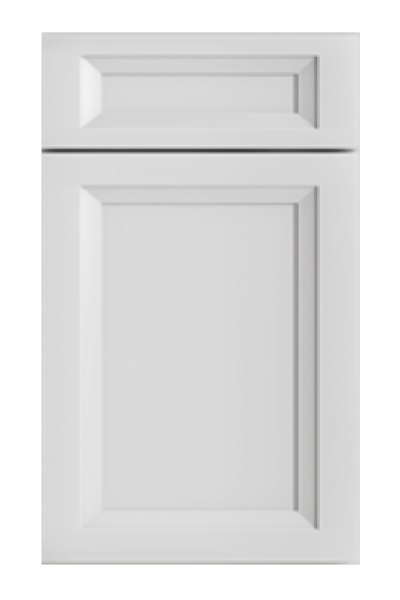
This is the one piece of advice that saves the most trouble, and almost nobody follows it. Cartons arrive, they get stacked in the garage, and they stay sealed until the fitter turns up three weeks later. If a panel is cracked or a hinge bag is missing, that is the worst possible moment to find out.
Open them, count the pieces against the list, and look at the finished faces. Ten minutes per carton on delivery day turns a problem into a replacement part that arrives before the work starts. The finishes with the deepest stock — Valencia White at 429 sizes, Oxford Cashmere at 371, Bristol Linen at 333 — are also the ones where a single replacement is least likely to hold anything up.
When nobody on the job has time to assemble, and the labour to do it costs more than the freight it saves. When the kitchen is small enough that the volume saving is trivial. And when the schedule has no slack at all — assembly is predictable, but it is another step that can slip.
For a contractor running several kitchens at once the calculation usually goes the other way, because assembly can happen off the critical path while other trades work. That is why the calculation looks different for a builder running several kitchens, which is set out in ordering cabinets by the run, than for a homeowner running one.
That the size you need exists in the finish you want, since ranges differ between finishes — Oxford White carries 314 sizes while Classic White carries 215, and a layout can depend on the difference. That you have actually seen the finish, whether that is Shaker Dove or Valencia White. That your measurements are right, because a returned cabinet is a returned cabinet whichever way it shipped. That you have somewhere dry to stack cartons. And that the count includes fillers, end panels and toe kick, which are the pieces people forget until the run will not close.
The whole range is in the cabinet catalogue, and if the layout is not fixed yet, the size grid comes first.
Every collection below is stocked at our Norcross, GA warehouse for pickup or delivery across metro Atlanta.



A two-tone kitchen fails in five predictable ways. All five are visible on paper before anything...

Yellowing is a coating problem, not a colour problem. Which means it is avoidable at the...

Duluth kitchens are mostly one window and eight-foot ceilings. That pair of facts decides more than...
Log in to see prices and place orders
Don't have an account? Register

