

Green went from brave to ordinary in about five years, and the reason is not fashion. It is the only cabinet colour that has a natural relationship with the material most kitchens already contain. Wood and green sit beside each other outdoors, constantly, and the eye has no argument with the pairing indoors either.
The greens divide cleanly. The pale, greyed ones behave almost exactly like a warm grey: they recede, they take any hardware, and after a month nobody in the house notices them. The saturated ones do the opposite — they are the first thing anybody comments on, which is either the point or the problem.
Choosing badly between those two groups is how people end up repainting. Deciding which of the two you actually want, before looking at any door, removes most of the risk.
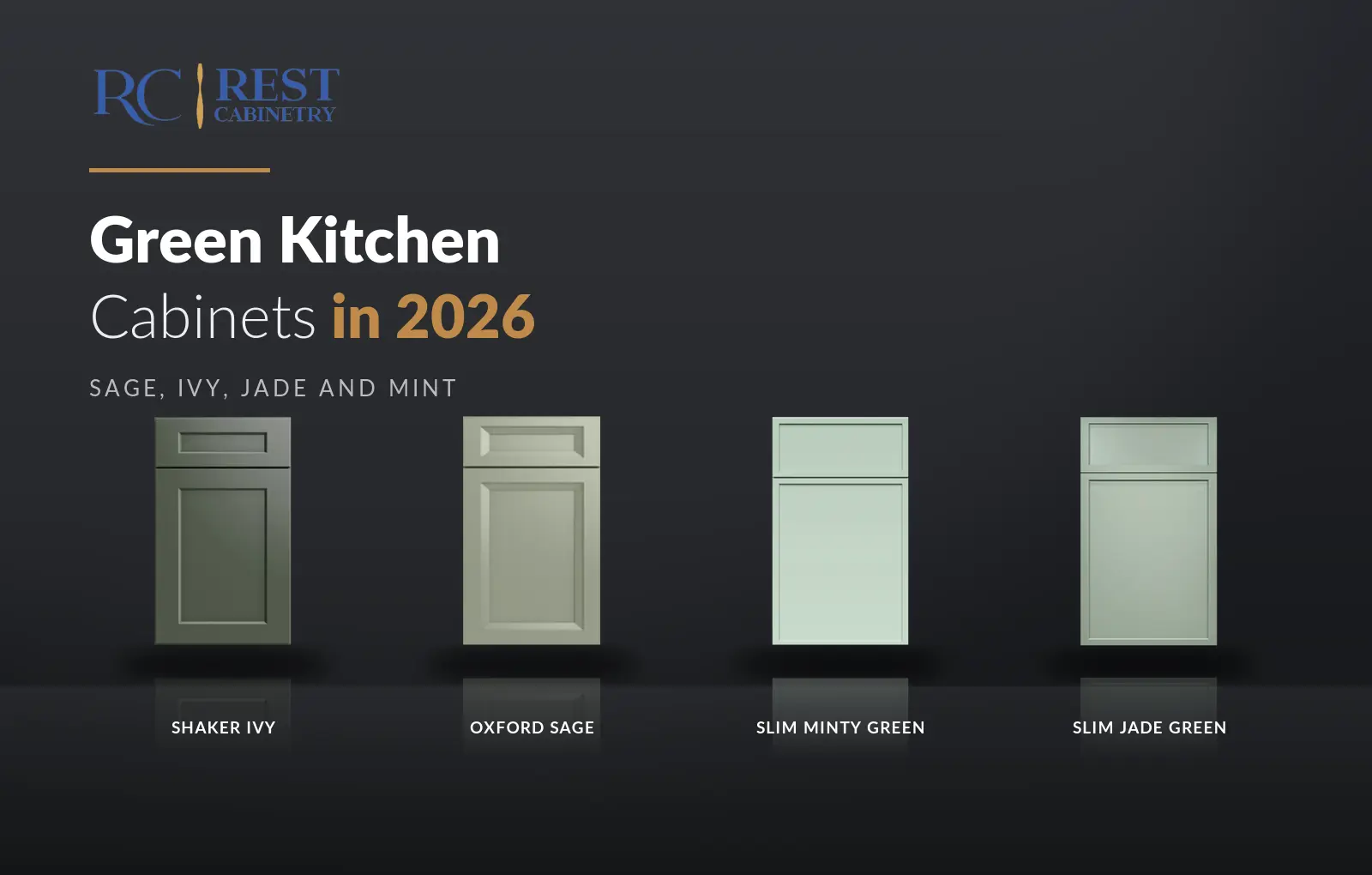
Six finishes and 1,753 cabinet sizes, across four collections.
At the quiet end, Haven Sage and Oxford Sage are greyed enough to work as a whole-room colour in a house that is not trying to make a statement. Oxford Sage puts it on a traditional door with a moulded edge; Haven Sage is cleaner.
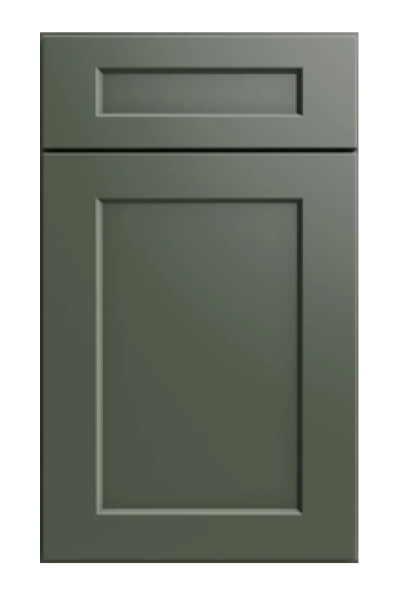
In the middle, Slim Minty Green is cooler and fresher, and the narrow rails of the Slim door keep it from feeling nostalgic. Shaker Ivy is deeper and warmer, the closest of the six to a traditional English kitchen green.
At the saturated end sit the two jades: Shaker Jade Green on a flat panel and Slim Jade Green on the narrow-rail door. Both are unmistakably a colour. Neither disappears.
Where wood flooring is being kept, green is the safest strong colour on offer. A honey or mid-oak floor under sage cabinets reads as calm rather than coordinated, and the two never fight for the same job.
It works upward too: a wood island such as Shaker Cotton Oak under a green perimeter, or the reverse. The pairing is forgiving enough that the exact tones matter less than they would with grey.
This is where green gets fussy. A stark white quartz above a warm green can look surgical, because the counter has no warmth to meet the door with. Cream, a warm white, or a stone with visible movement all sit better.
Marble and marble-look surfaces work particularly well above the greyed greens and less well above jade, where the veining ends up competing. If the counter is already chosen and it is cold white, the pale greens are the safer half of this article.
Brass on green is the classic and it is classic because green is the one colour that makes brass look intentional rather than nostalgic. Aged or unlacquered brass more so. Matte black works on the darker greens and flattens the paler ones. Nickel is the neutral answer and rarely wrong.
A whole kitchen in a pale green is fine and will still look considered in ten years. A whole kitchen in jade is a commitment, and it is the sort that reads as confident in a big room and relentless in a small one. The middle route — green below, pale above, or a green island alone — gets most of the character for a fraction of the risk.
Whichever way you go, the split should land where the room already changes. That is covered in where to draw a two-tone line.
The greyed greens age like a neutral, which is to say invisibly. Nobody will look at a sage kitchen in eight years and place it in a decade, because the colour has no era attached to it. That is the strongest practical argument for the pale half of this range.
The saturated greens are different. Jade and deep ivy read as a choice made at a moment, and whether that moment looks confident or dated later depends almost entirely on what surrounds them. Kept next to wood and stone they hold up; surrounded by other strong colours they do not. If resale within a decade is a real possibility, that is worth weighing before the deposit.
The received wisdom is that colour shrinks a small room. It is not quite right. What shrinks a small room is contrast, and a pale green used on every surface — base, wall, tall — produces less contrast than white cabinets against a dark floor.
So the small-kitchen rule is not avoid green, it is avoid the split. One green everywhere, hardware in a metal that does not shout, and the room reads as considered rather than cramped. It is the saturated greens that need space, and it is the two-tone treatment that needs a bigger room than people expect.
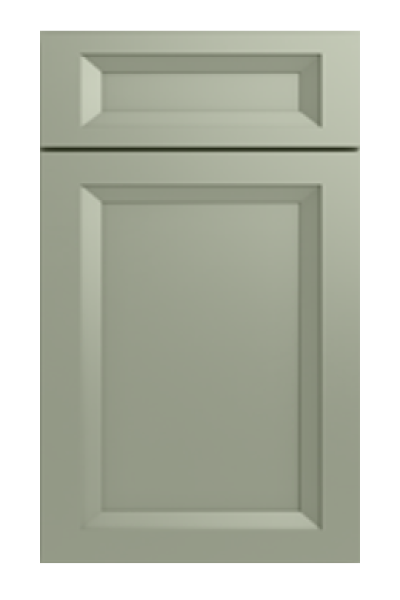
Green shifts more than any other colour under artificial light, and a sage that looks grey at midday can go distinctly green at night. Take the door home to the room if you can, and failing that, judge it beside an offcut of the flooring that is staying put. All six are held in Norcross, and the two sages side by side settle a decision that photographs will not.
If the layout is still open, measure the room first — the colour is the easy part. The full range is in the cabinet catalogue.
Every collection below is stocked at our Norcross, GA warehouse for pickup or delivery across metro Atlanta.

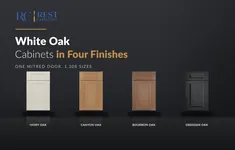
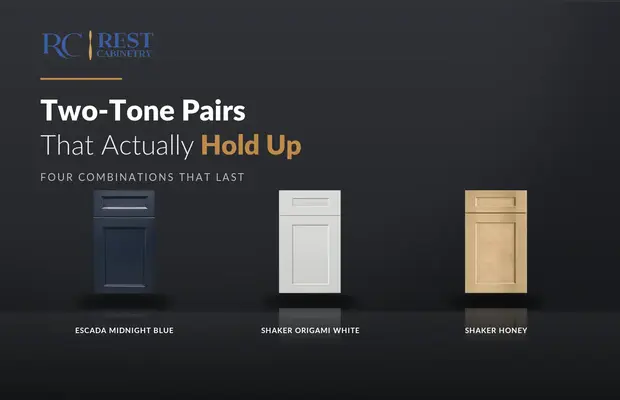
Most two-tone pairs are chosen from a photograph. Four of them survive a decade, and they...
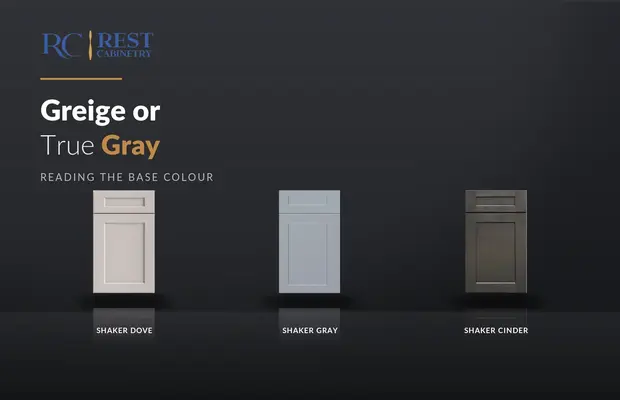
Greige and gray look identical on a screen and behave nothing alike in a room. One...
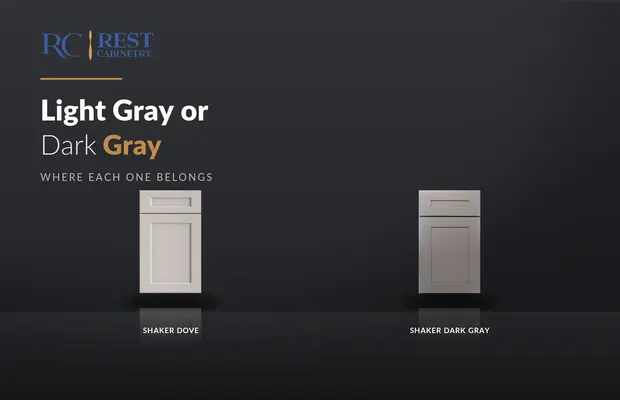
Undertone decides whether a gray is right. Depth decides whether the room still works.
Log in to see prices and place orders
Don't have an account? Register

