

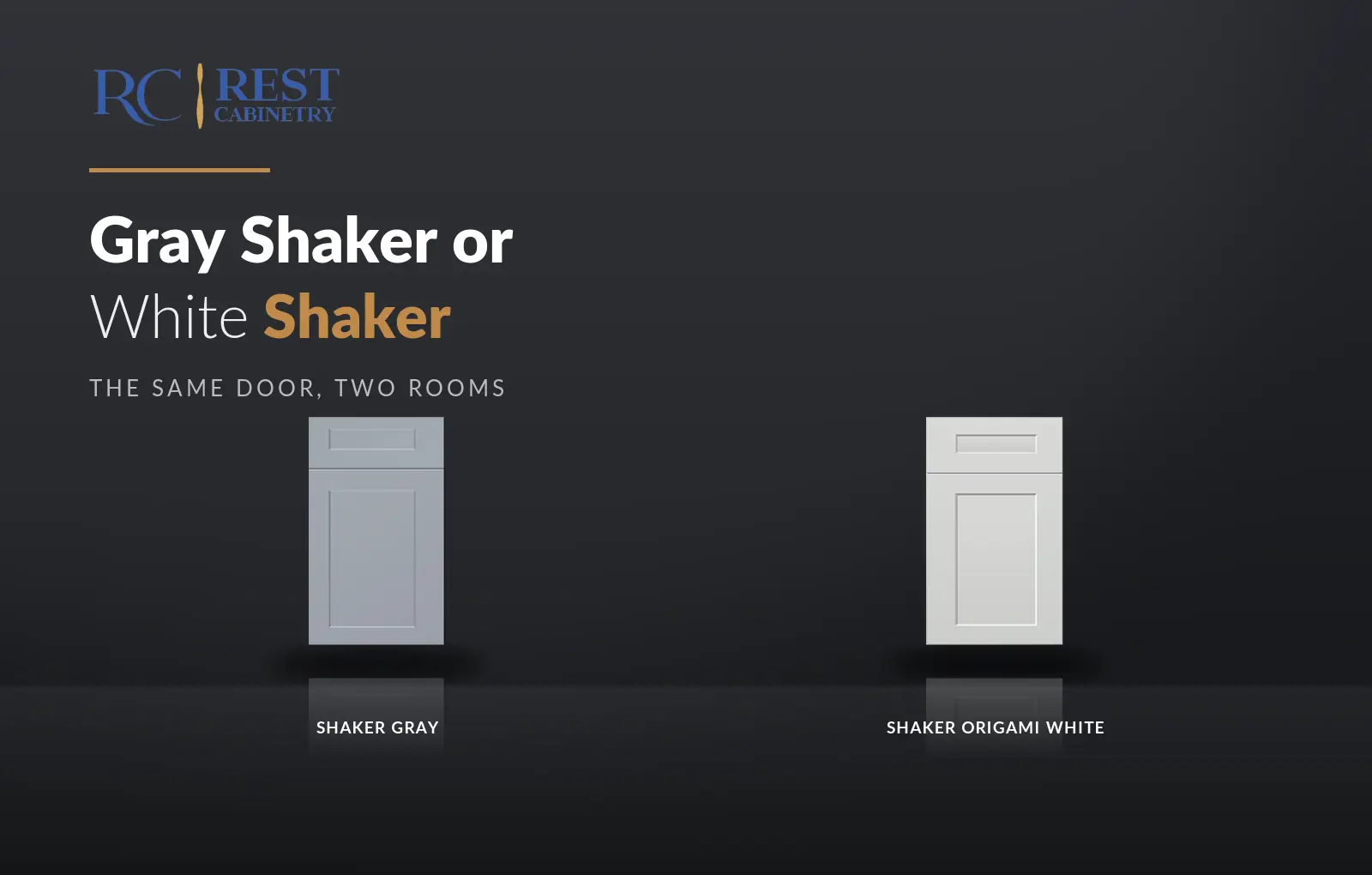
This comes down to four things about the room, not four things about you. Work through them in order and the answer usually stops being a matter of preference.
White if the kitchen has one window or a dark floor. Gray if it has good light and a floor you want to sit beside rather than against. In a room with plenty of daylight either works, and then it becomes taste.
Pale fronts return light into a room; mid-tone fronts absorb some of it. In a room lit by one window above the sink, that difference stops being decorative, it is the difference between working in daylight and switching a lamp on in the afternoon.
Below two good windows, white wins on function alone. Above that, the question opens up.
White sits beside almost any floor because it has no colour to clash. Gray does not have that freedom — cool gray above a red-toned oak floor fails more reliably than any other combination in a kitchen, and no choice of handle repairs it.
Where warm flooring is being kept and gray is still what you want, the answer is a warm gray: Shaker Dove rather than Shaker Cinder. If the floor is cool or grey-toned, the whole gray range opens up.
A white kitchen puts all the visual interest into the counter, which is why white cabinets and a veined stone is such a common pairing — the stone becomes the feature and the cabinets are the frame.
A gray kitchen already has tone on the cabinets, so a busy counter above it competes. Grays generally want a quieter worktop, and pair better with a plain or lightly marked surface than with heavy veining.
White shows greasy handprints by the range within a week and hides knocks almost completely. Gray does the reverse: it stays looking clean far longer and shows a chipped edge more clearly.
In a household that cooks hard every evening, gray asks for less attention. In a household with children who bump things, white forgives more. Neither is better; they fail differently.
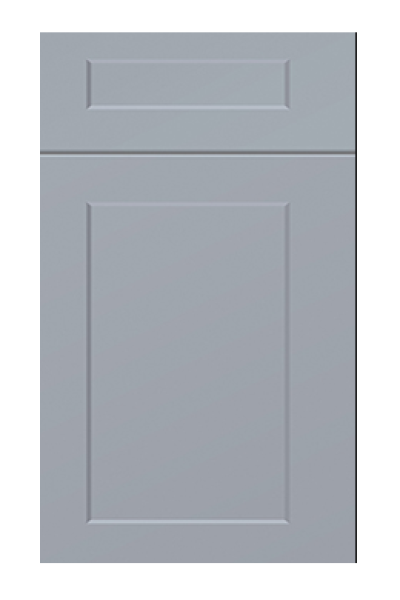
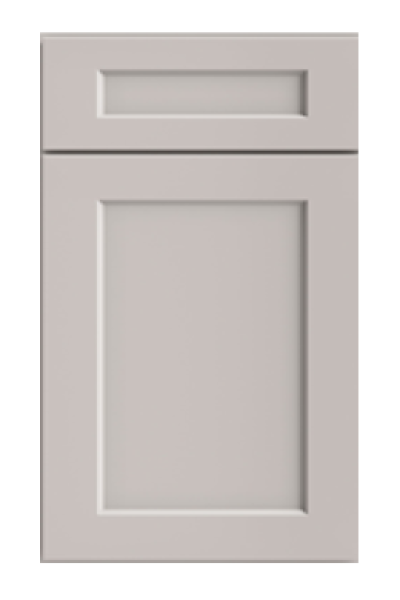
Three white Shaker finishes carrying 1,015 sizes between them — Shaker White, Shaker Origami White and Shaker Antique White. On the gray side the Shaker line runs from the soft Shaker Dove through the neutral Shaker Gray to Shaker Dark Gray at the deep end. What the natural interior of Shaker Gray means is covered in Shaker Gray with a natural interior.
Same door, same construction, same collection. Only the paint changes.
Both, split. White wall cabinets to keep the light at eye level, gray below to take the wear and anchor the room. It is not a compromise; it is what the two finishes are each good at, put where they are good at it.
If that is the direction, put the join where the cabinetry itself changes — where to draw a two-tone line covers exactly that.
If the worktop is staying, it has already made half of this decision. A dark counter above white cabinets is a strong horizontal line and a very common, very safe kitchen. The same dark counter above gray cabinets removes that line, and the whole lower half of the room becomes one mass — which can look expensive in a large kitchen and heavy in a small one.
A pale counter reverses it. Above white it disappears into the cabinets and the room becomes about the floor and the walls. Above gray it reads as a bright band at waist height, which is a genuinely useful effect in a room with poor light.
So: dark counter, small room, choose white. Pale counter, poor light, gray works harder than people expect.
People choose cabinets first and paint the walls afterwards, which is the right order, but it hides a trap. White cabinets need the wall to have some colour in it or the room flattens into one pale surface with no depth. Gray cabinets need the opposite: a wall lighter than the doors, or the room closes in.
So the finish you pick quietly decides the wall too. If you already know the wall colour is staying, work backwards from it — a warm beige wall pushes toward Shaker Antique White or Shaker Dove, while a cool white wall gives Shaker Gray the contrast it needs to read as a choice.
Getting this wrong is not expensive to fix, which is the one comfort here: a wall is a weekend, a kitchen is not.
Ask which of the two you would rather repaint. Both are painted finishes and both can be repainted, but the honest position is that almost nobody repaints kitchen cabinets, so the finish you order is the finish you live with.
Given that, the tiebreaker is which one you would still be content with if nothing about the room changed for a decade. White is the answer people give more often, and gray is the answer people who cook a lot give. Neither group is wrong about their own kitchen.
Bring a piece of the floor and a sample of the worktop to Norcross and put a white door and a gray door on the counter beside them, in daylight. Four checks and two doors take about ten minutes, and they replace a fortnight of second-guessing.
The wider gray range is covered in getting a gray undertone right, and the full catalogue is in shop cabinets.
Every collection below is stocked at our Norcross, GA warehouse for pickup or delivery across metro Atlanta.



The gray is on the outside. Open a door and the box is natural wood veneer...
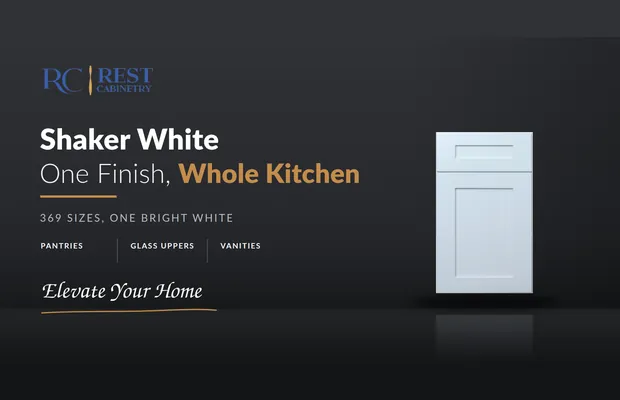
Shaker White carries 369 sizes, the most of any Shaker finish we hold. That range is...
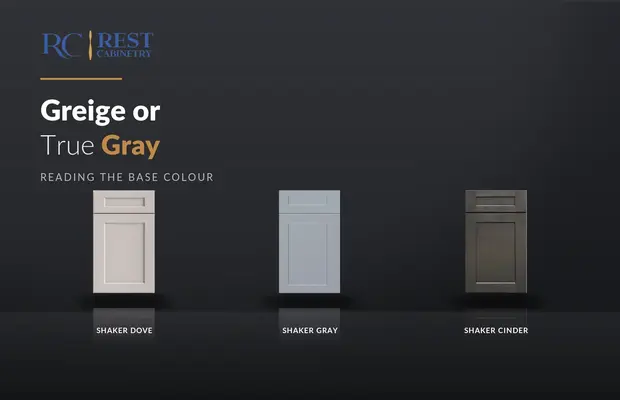
Greige and gray look identical on a screen and behave nothing alike in a room. One...
Log in to see prices and place orders
Don't have an account? Register

