

Wood came back, and not because anyone got tired of white. It came back because grain does something no paint can: it hides the daily life of a kitchen. Everything below follows from that one property, including the reason wood is harder to buy than paint.
The wood and stained finishes run across seven collections, from the palest natural through honey and saddle into chocolate, espresso and near-black. That breadth matters more than it sounds: wood tone is far harder to match to an existing floor than paint is, and a narrow range means compromise.
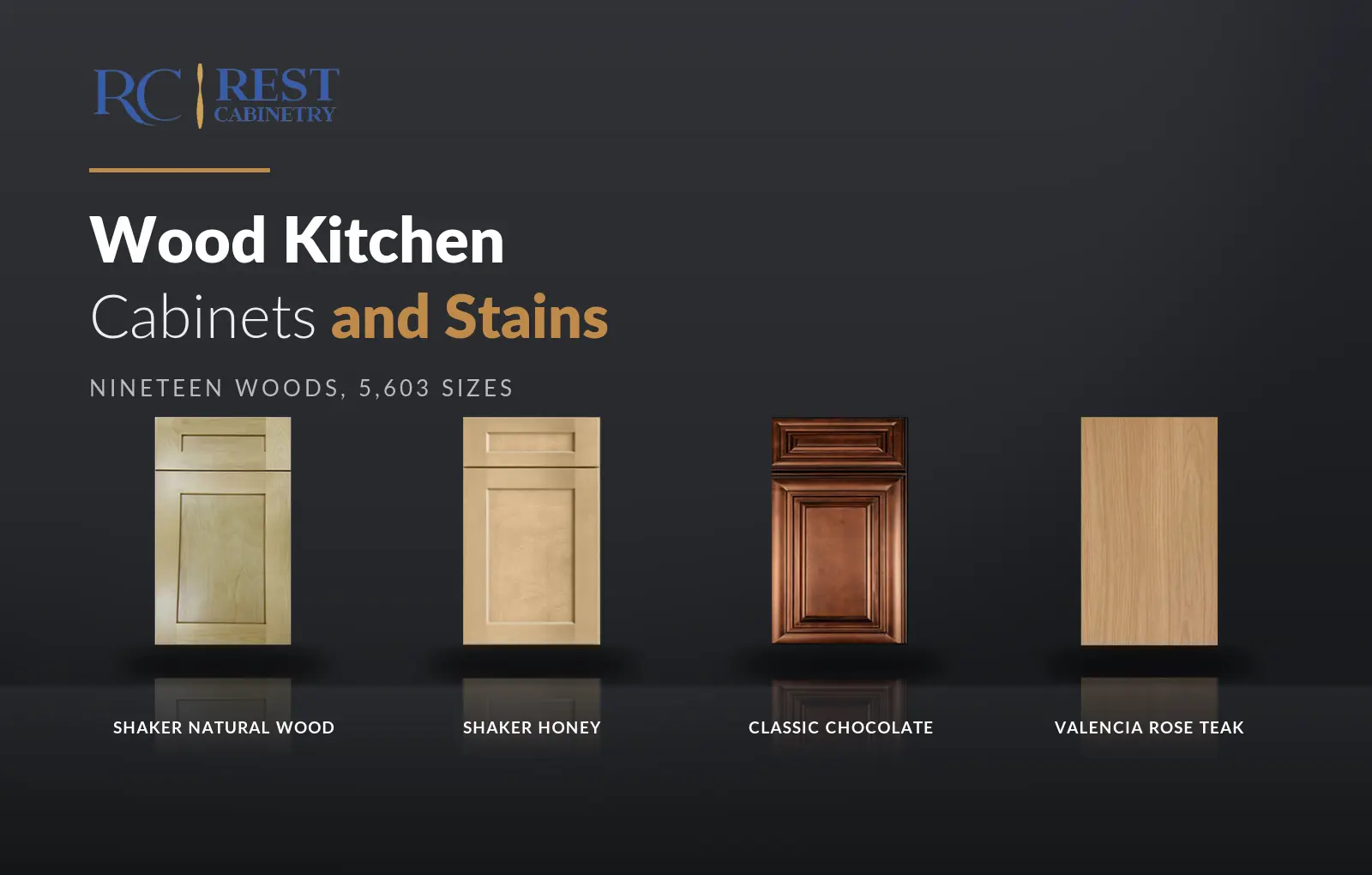
Shaker Natural Wood is the reference: a clear coat and almost no colour, so the board arrives looking like a board. Shaker Cotton Oak and Slim Natural sit close to it, the second on a narrow-rail door for a more modern face.
These are the woods that behave like a light neutral. They bounce light the way a pale paint does, they suit a small kitchen, and they sit under almost any counter.
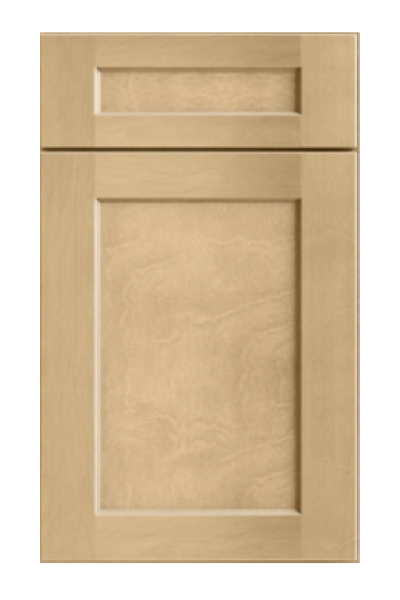
This is where most wood kitchens live. Shaker Honey is warm and golden; Casselberry Saddle is deeper and more traditional on a five-piece door. Haven Dune and Haven Ember cover the same ground on a cleaner door, Dune the paler of the two.
For grain with a modern front, Valencia Rose Teak puts it on a frameless slab — one of the widest size ranges we hold in any finish, and the option when the room wants wood without any traditional cue at all.
White oak has a range of its own: four finishes on one mitred white oak door, from a painted ivory through two stains to a black.
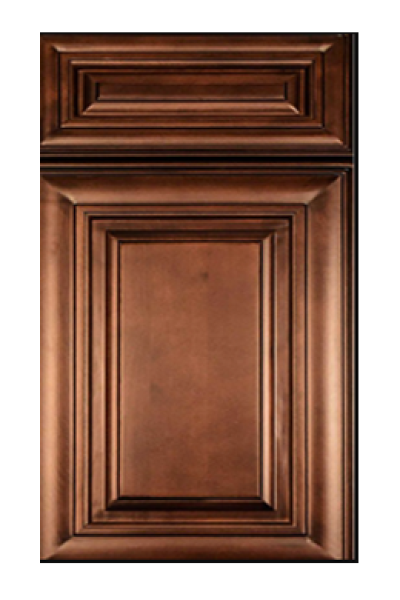
Classic Chocolate and Obsidian Oak take wood as far as it goes while keeping the grain visible, and Inset Truffle Brown does the same on an inset door. Walnut on a frameless front is the most contemporary reading of a dark wood.
These hide wear better than anything else in the catalogue. They also absorb the most light, so the same window arithmetic that governs any near-black kitchen governs these.
Wood cannot be matched later. No two boards are alike, which means a pair of doors in one finish will never be twins, and a door ordered to replace one three years later lands near the mark rather than on it. On paint that is invisible. On wood it is not.
The practical answer is to order the whole house at once — kitchen, laundry, any bathroom — so the whole house is cut from one batch. If a second phase is even possible, count it now.
Shaker Unfinished exists for the case where nothing in the range matches the floor you are keeping. It arrives bare and is stained on site to whatever the room needs, which is the only way to hit an exact match. It is also the finish that most rewards a good finisher and most punishes a rushed one.
The same logic runs through the wood range hoods, which ship unfinished for exactly this reason.
Wood is the easiest thing in a kitchen to pair, because it is already a mixture of tones rather than one flat colour. It sits under white, beside navy, against sage and below charcoal. The only pairing that needs care is wood against a strongly patterned stone, where two busy surfaces compete.
Putting timber on the island alone, with paint everywhere else, is still the surest way to warm a room without committing all of it — see where to draw a two-tone line.
This is the commonest reason a wood kitchen goes wrong, and the rule is counter-intuitive: do not try to match the floor. Two wood tones that are close but not identical read as a failed match, while two that are clearly different read as a decision.
So either go several shades away from the floor, or go to paint above and keep the wood on the island where the separation is obvious. Attempting to hit the same tone as an existing floor is the one approach that reliably disappoints, because flooring and cabinetry are finished by different processes and will never quite agree.
On a well-made wood door the grain runs the length of each rail and stile, so the frame reads as four pieces of timber around a panel. On a poor one the pattern is printed and repeats, and the eye catches the repeat within a few doors even when it cannot say what is wrong.
That is the single clearest difference between a real wood kitchen and something imitating one, and it is visible from across a room. It is also why a wood finish is worth seeing as a full door rather than as a sample chip: a chip cannot show you a repeat.
Bring a piece of your floor. That is the whole method. Wood-on-wood is the pairing that goes wrong most often and the one a photograph is least able to help with, because both surfaces shift under different light. Every finish above is at the Norcross warehouse, and holding two stains against your own floorboard takes a minute and settles the question.
If the construction behind the door is what you are really weighing, the box itself is the place to look. The range is in the cabinet catalogue.
Every collection below is stocked at our Norcross, GA warehouse for pickup or delivery across metro Atlanta.

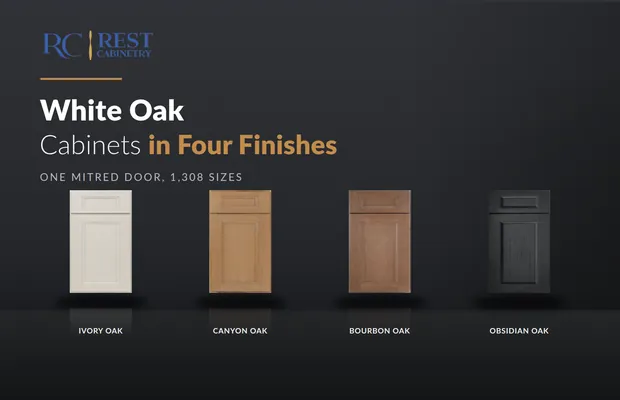
Four finishes on one white oak door: a painted ivory, two stains and a black. What...
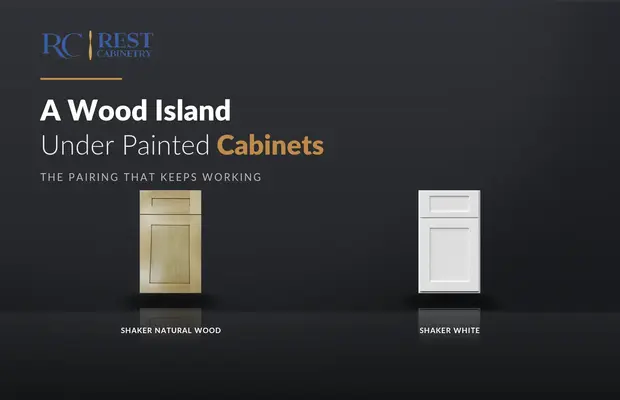
Wood on the island is the two-tone that people who dislike two-tone kitchens still like.
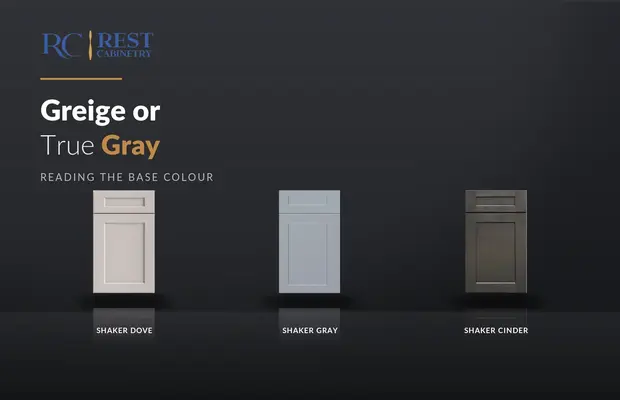
Greige and gray look identical on a screen and behave nothing alike in a room. One...
Log in to see prices and place orders
Don't have an account? Register

