

Paint, stain, laminate and the practical differences between them - how each wears at the handle, how each behaves next to a dishwasher vent, and which ones show a repair. Finish is where the difference between a kitchen that ages well and one that does not usually shows up first, and it is easier to choose correctly than to fix later.
Showing 1 to 12 of 14 results
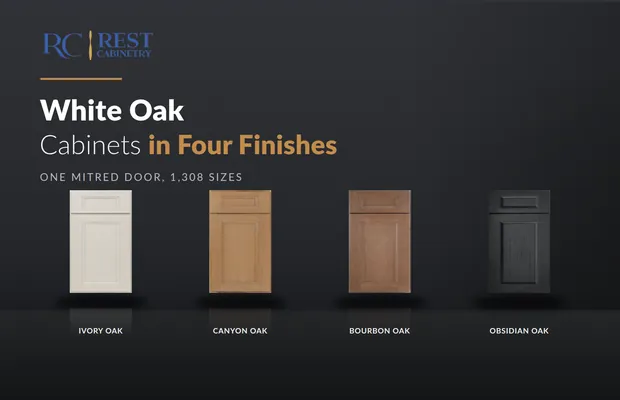
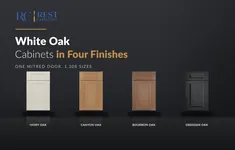
Four finishes on one white oak door: a painted ivory, two stains and a black. What the mitred frame does, and how to choose between them.
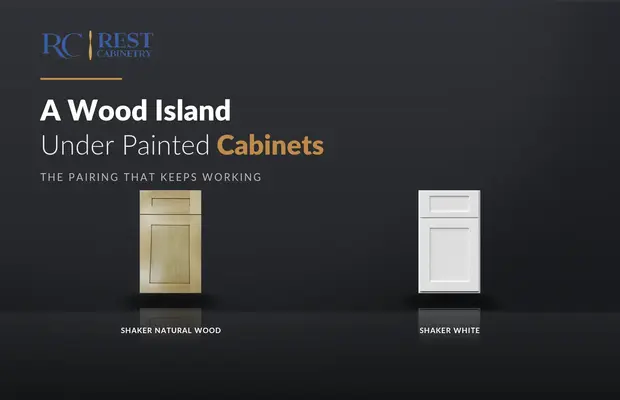
Wood on the island is the two-tone that people who dislike two-tone kitchens still like.
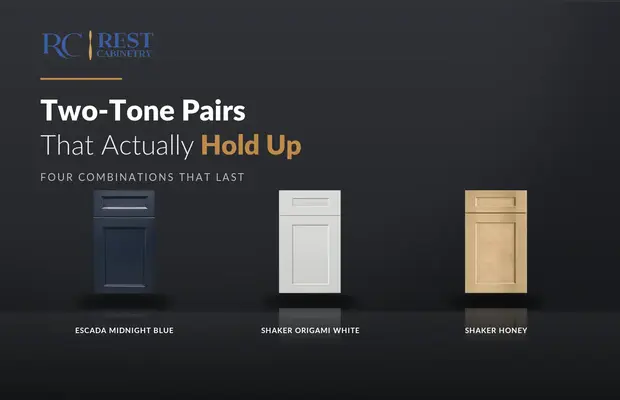
Most two-tone pairs are chosen from a photograph. Four of them survive a decade, and they have something in common.
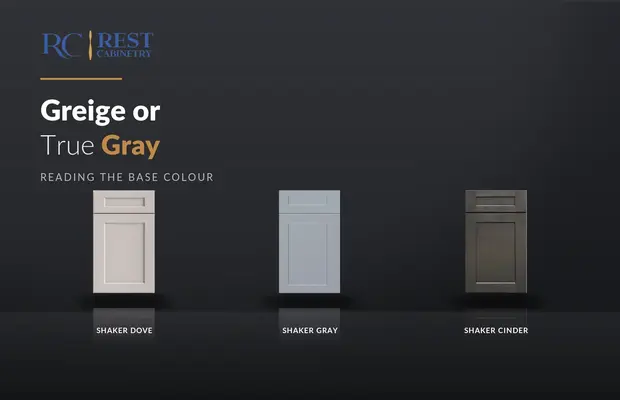
Greige and gray look identical on a screen and behave nothing alike in a room. One test separates them.
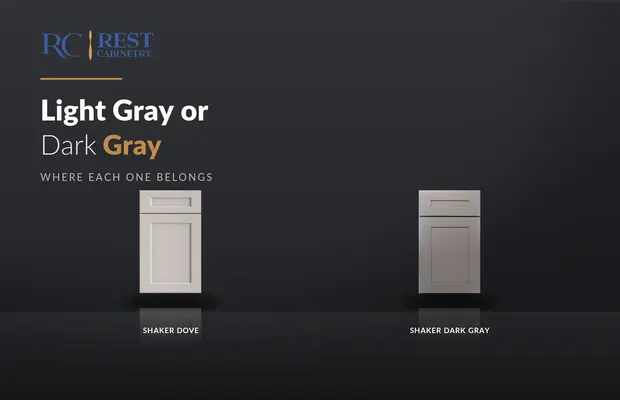
Undertone decides whether a gray is right. Depth decides whether the room still works.
What dated was one specific gray in one specific decade. The colour itself is doing fine.
Yellowing is a coating problem, not a colour problem. Which means it is avoidable at the point of ordering.
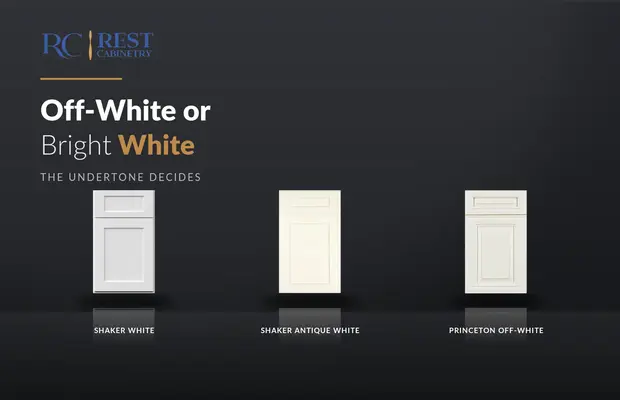
There is no such thing as plain white. Every white leans somewhere, and the room decides which lean you want.
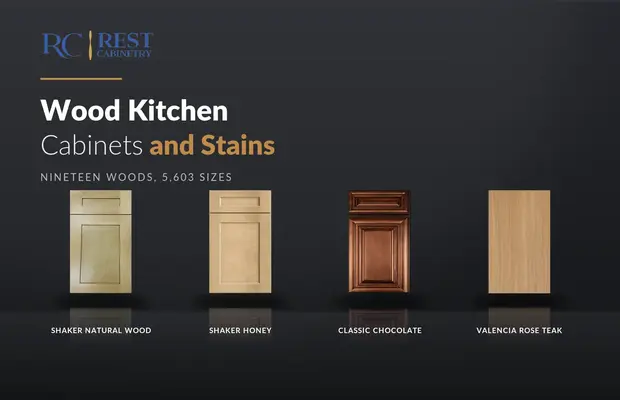
Grain is camouflage. That single property is why a wood kitchen ages better than a painted one, and why it can never be matched later.
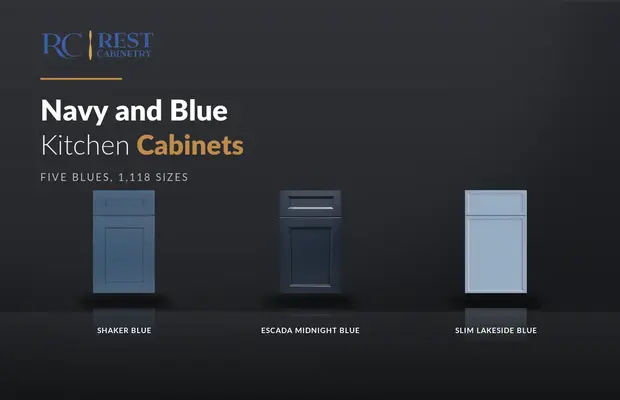
Navy is the only strong colour that behaves like a neutral. That is why it has outlasted every other colour trend in kitchens.
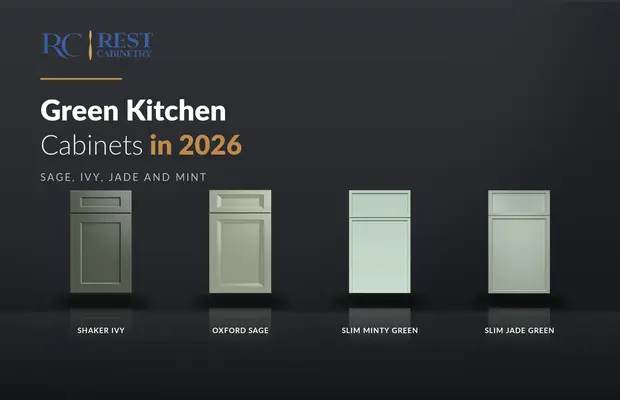
Green is the one colour that never looks out of place next to wood, because the two have been next to each other outdoors forever.
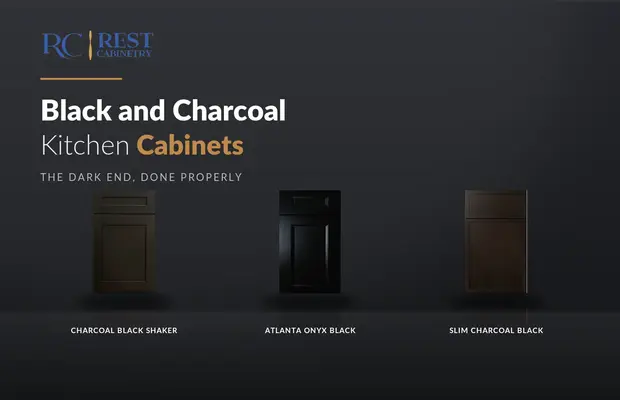
A black kitchen is the most photographed and the most regretted. The difference between the two is almost always the window count.

Log in to see prices and place orders
Don't have an account? Register

